Making Circular Transformation Manageable
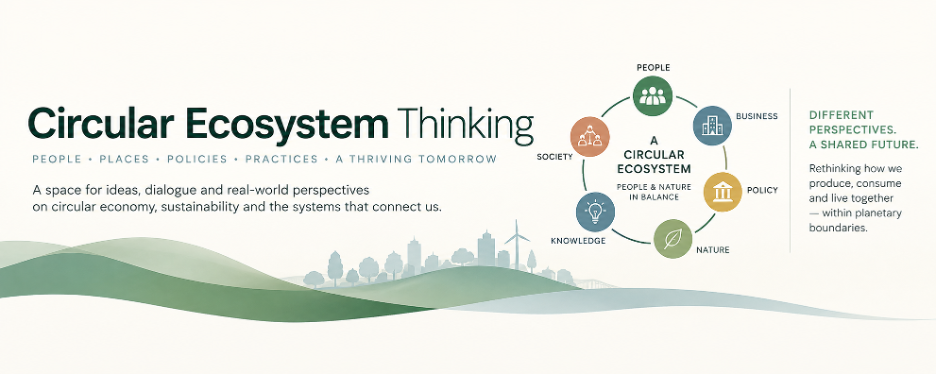
The transition towards a Circular Economy is often approached through products, materials, technologies and business models. We design products for longer lifetimes, improve repairability, develop recycling technologies, use secondary raw materials and create new services that keep products and resources in circulation. All of this is necessary. But there is a fundamental problem: circular transformation cannot be achieved through isolated action.
A company can design a repairable product. But repair does not happen because a product is technically repairable. It also requires information, spare parts, skills, repair services, legal rights, affordability and people who actually have access to these services. A reuse system can be created, but it will only work if collection, logistics, storage, quality standards, information, trust and participation are connected. Circularity therefore does not emerge from individual solutions alone. It emerges from the relationships between solutions, actors and the conditions that enable them to work together. This is where Circular Ecosystem Management begins.
From individual solutions to circular ecosystems
Circular Economy strategies, policy instruments, circular business models, repair initiatives, research projects and civil-society activities can all contribute to circularity. But their existence does not automatically create a functioning circular system. Circular transformation depends on relationships between companies, public institutions, municipalities, research, civil society, financial actors, infrastructure providers, communities and citizens. These actors have different interests, responsibilities, resources and capacities. They do not have to become one organisation, nor do they have to agree on everything. What matters is whether their different contributions can be connected around a shared Circularity Objective.
This changes the central question. Instead of asking only What can this organisation do to become more circular?, we begin to ask: What has to happen in the wider system for circularity to become possible? Which actors are already contributing? Which actors are missing? Which infrastructures are needed? Where is relevant knowledge located? Who has the capacity to implement change? Which regulations enable circularity, and which ones prevent it? Who carries costs and responsibilities? Who benefits from the existing system? And how can different contributions be connected?